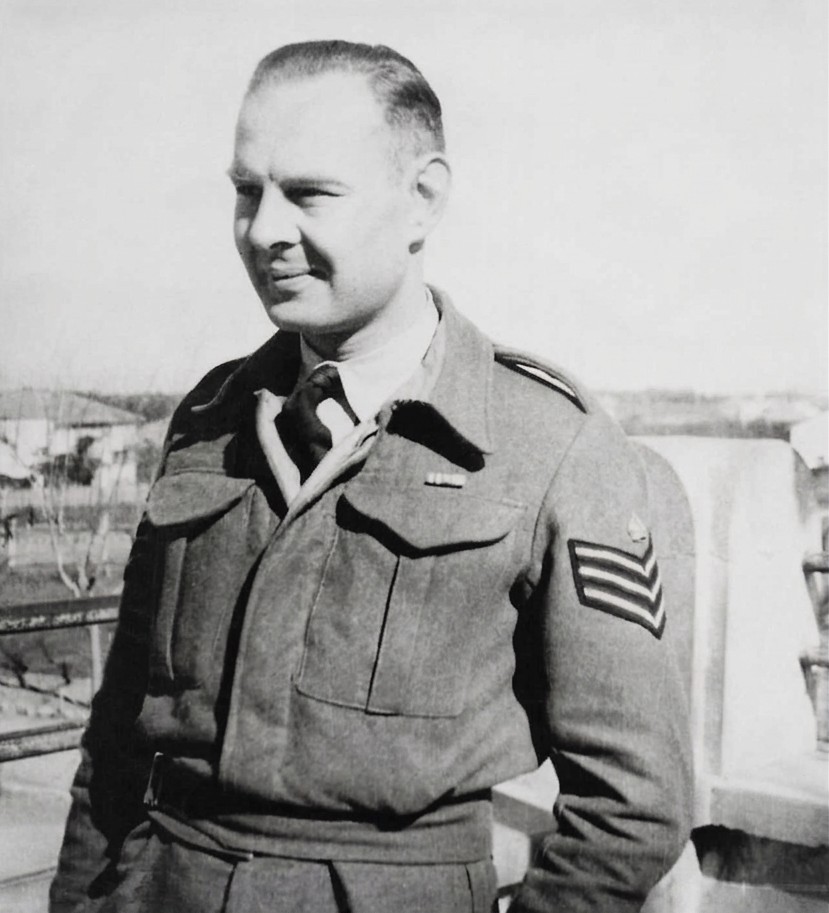

Most of us never asked. That generation — the ones who were there, who did extraordinary things in extraordinary times — came home, got on with life, and became grandparents. We knew him as Umpa. Or Oompa. Or Dad Dad, depending on which branch of the family you were from. A kind, gentle man with a passion for stamps that he tried, with great patience, to share with me. I’m sad to say it never took. Sorry, Umpa.
What I remember most clearly, towards the end of his life, was the emphysema. Years of cigarettes and later a pipe — all finished long before we were born — had taken their toll. He moved carefully. He lost his breath. I remember him trying to play cricket with me in the garden and having to stop. It breaks my heart a little now, reading these diaries, to meet the young man he was then: athletic, sociable, endlessly curious, someone who organised the cricket club, played football, attended every ENSA show and variety performance he could find, and danced at every opportunity. A man who loved life and grabbed it with both hands.
Walter Kenneth Stevens served in the Royal Air Force as a laboratory technician from 1941. He was not a pilot or a soldier in the conventional sense — he was a scientist in uniform, following the 8th Army across the desert war, processing blood slides for malaria diagnoses, running mobile laboratories through Libya and Tunisia and Sicily, doing essential and largely unsung work that kept men alive. He was there for nearly all of it: the long months in Iraq at RAF Habbaniya and Shaibah, the push west after El Alamein, the fall of Tunis, the invasion of Sicily. And then, in Algiers in the autumn of 1943, something entirely different — the third volume of his diary tells a story that overlaps with the second, but from a new angle entirely. By then, he had met Margaret.
He waved at Churchill from a roadside near Carthage. He once drove into a live minefield and reversed to safety. He was thrown across a room by a 500lb bomb blast and walked away without a scratch. He did not consider any of this particularly remarkable. He just wrote it down.
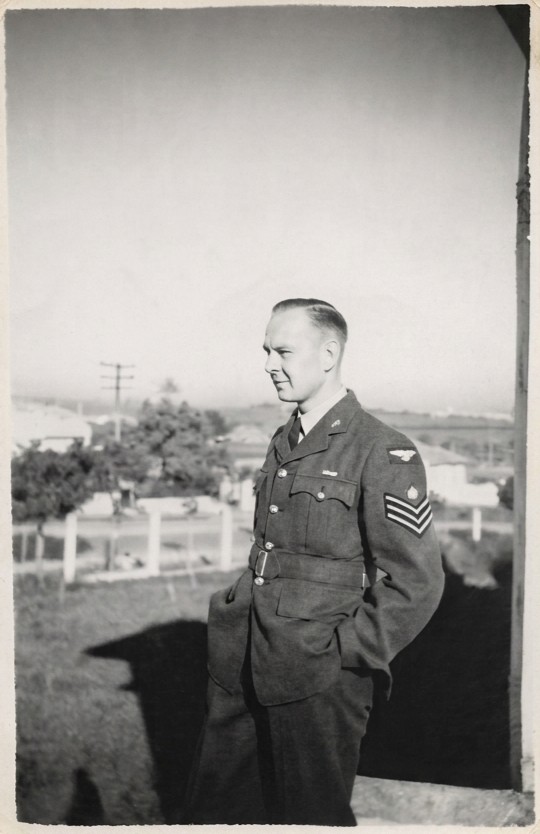
Walter, Mediterranean, c.1943–44.
And that is the remarkable thing. Walter kept diaries. Three volumes, written in a clear and vivid hand, covering August 1941 to the end of 1943. He was an enthusiastic and observant writer — funny, affectionate, occasionally wry, always honest. Reading them is not like reading a historical document. It is like having a conversation with someone you wish you had known better.
The diaries
I should tell you how these diaries came to be here. My father, John Stevens — Walter’s son — knew what they were worth. Before John died, he would spend many late nights carefully working through the diaries, first attempting to read them aloud into dictation software — not so far removed, as it turns out, from the technology that has finally made this possible — and later typing the transcription by hand, page by patient page. His hard drive failed. The files were lost. All that work, gone. It haunted him.
After John passed, my mother Gillian took on the task of meticulously collating all the original documents, photographs, and research materials, bringing the same passion for family history that my father had. Without her care and dedication, much of what you see on this site would simply not exist.
I find it both sad and wonderful that the tools which finally made this possible came too late for my father. He deserved to see it finished. This website is, in part, a completion of what John started. He wanted people to see what his parents did during the war. Now, finally, they can.
This Website
The purpose of this archive is to bring Walter’s wartime experience to life as he recorded it — his years across Iraq, North Africa and Sicily, and the love for Margaret that fills the final pages of his diary.
The chapters here summarise what Walter wrote. They are a guide to the journey, not a replacement for it. For the full picture, the diaries themselves are available to download in three forms: the original scanned volumes, a faithful transcription, and a readable narrative version with footnotes and clarifications for those who would like to follow the story from beginning to end.
Thank you, Grandma and Umpa.
Will Stevens